
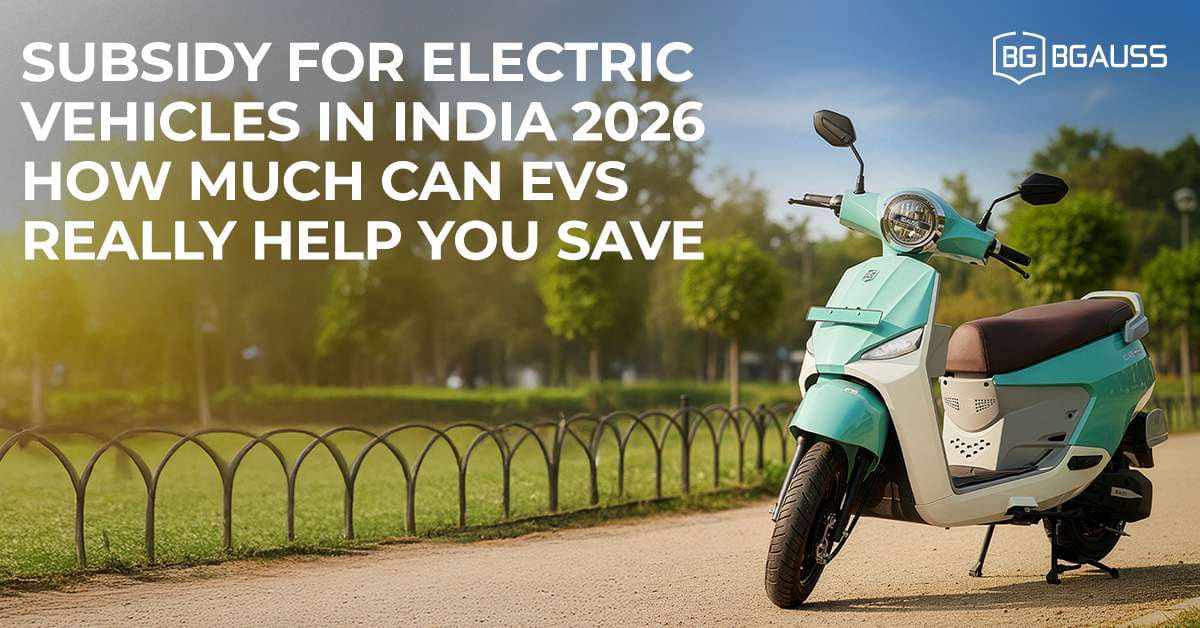
Electric Vehicle Subsidy India 2026: EV Savings Explained
Introduction
In 2026, buying an electric scooter in India will no longer be just an environmental decision. It’s a financial one. Between rising fuel prices and government incentives, the electric vehicle subsidy has become one of the biggest reasons EVs now make economic sense for everyday riders.
But how much does a subsidy actually reduce the price? How does the government subsidy for electric scooter in India work in practice? And what is the actual cost of an electric scooter in India once all benefits are applied? This blog breaks it down clearly, with real numbers and real impact.
What Is an Electric Vehicle Subsidy?
An electric vehicle subsidy is a financial incentive provided by the government to reduce the upfront cost of EVs and accelerate adoption. In India, this support comes through:
- Central government schemes
- State-level EV policies
- Road tax and registration fee exemptions
Together, these reduce the purchase price and ownership cost of electric scooters significantly compared to petrol scooters.
EV Subsidy in India 2025: How It Works
As of 2025, EV subsidies in India are structured in three main ways:
- Central-Level Support
While earlier schemes like FAME-II focused heavily on incentives per kWh, the current approach is more targeted. Instead of flat subsidies for every EV, the focus has shifted to:
- Encouraging affordable EVs
- Supporting domestic manufacturing
- Reducing ownership costs through tax and fee exemptions
This still directly impacts the subsidy for electric scooter, especially in the affordable segment.
- State Government Subsidies
This is where most real savings happen.
Many Indian states offer:
- Direct purchase subsidies
- Road tax exemptions
- Registration fee waivers
This government subsidy for electric scooter in India varies by state, but it can reduce the on-road price by tens of thousands of rupees depending on where you live.
- Indirect Financial Benefits
Even when direct cash subsidies are lower, EV owners still save through:
- Zero road tax in many states
- Lower insurance costs
- Lower GST compared to petrol vehicles
These benefits together form a practical ev subsidy ecosystem, not just a single discount.
Actual Cost of an Electric Scooter in India (With Subsidies)
This is where EVs quietly outperform petrol scooters.
Let’s break down the actual cost of an electric scooter in India:
Upfront Cost (After Subsidy)
Thanks to the electric vehicle subsidy, many electric scooters now sit in the same price range as petrol scooters, and in some states, even lower.
For example:
- Base electric scooters can drop well below their sticker price after state incentives.
- Registration and road tax savings further reduce the on-road cost.
Running Cost
- The cost per km is far lower than petrol.
- No engine oil, clutch, or exhaust maintenance
- Fewer moving parts = fewer service expenses
Over 3–5 years, these savings often exceed the value of the initial subsidy for the electric scooter itself.
Where BG Max C12 Fits In
The BG Max C12 is a strong example of how subsidies make EV ownership genuinely affordable.
Why does it benefit directly from EV subsidies:
- Falls in the affordable electric scooter segment
- Eligible for applicable state-level ev subsidy benefits
- Low running and maintenance cost amplifies long-term savings.
For many buyers, once subsidies and ownership costs are considered, the BG Max C12 ends up costing significantly less than an equivalent petrol scooter over time, even if the upfront prices look similar.
How Much Can You Actually Save?
Let’s look at savings in practical terms:
- Reduced purchase price through government subsidy for electric scooter in India
- Zero or minimal road tax and registration costs
- Savings on fuel every single month
- Lower servicing and maintenance expenses
When combined, EV owners often save ₹50,000–₹1,00,000+ over a few years, depending on usage and state policy. That’s real money back in your pocket, not theoretical benefits.
Things Buyers Should Know Before Relying on Subsidies
Smart buyers keep a few things in mind:
- Subsidy amounts vary by state and can change
- Some benefits apply only to the first owner
- Dealer support helps ensure correct subsidy application
- Always check the on-road price after subsidy, not just ex-showroom
A good dealer will transparently explain how the electric vehicle subsidy applies in your city.
How to Avail EV Subsidy Easily
The process is simpler than most people expect:
- Choose an eligible electric scooter.
- Buy from an authorised dealer.
- Dealer processes subsidy-related documentation.
- Final price reflects applicable benefits.
In most cases, buyers don’t need to run around offices — the subsidy is already baked into the transaction.
Conclusion
In 2025, the electric vehicle subsidy isn’t just a government initiative — it’s a real financial advantage for buyers. When you factor in purchase incentives, tax savings, and long-term running costs, the actual cost of an electric scooter in India is often far lower than petrol alternatives.
Models like the BG Max C12 show how affordable EVs, combined with smart subsidies, make electric mobility a logical upgrade, not a premium choice.
If you’re evaluating your next two-wheeler purchase, this is the right time to switch.
Book Now and take advantage of EV subsidies while they still make electric scooters one of the smartest investments on Indian roads.